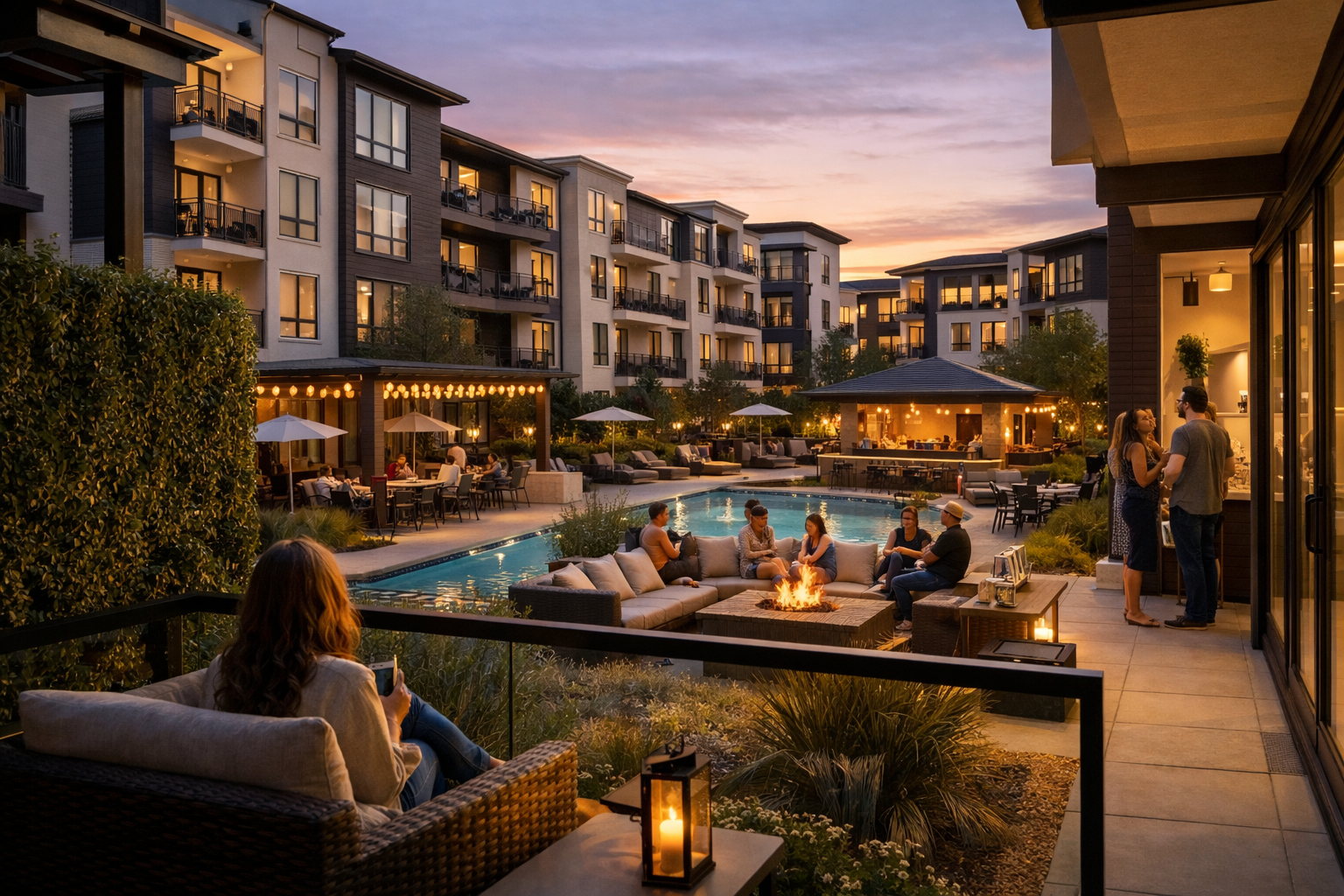
Luxury apartment living appeals to people who want more than just square footage. Residents often look for quiet, comfort, security, and personal space, but they also want access to shared amenities, social opportunities, and a sense of connection within the building. That balance can be difficult to create because too much emphasis on community can make a property feel crowded, while too much isolation can make it feel impersonal. Well-designed luxury apartments solve this by shaping the building, amenities, and daily resident experience around both needs at once. Privacy and community do not have to compete when the property is planned carefully.
Where privacy meets connection
- Building Design Shapes How Residents Experience Personal Space
One of the main ways luxury apartments balance privacy with community living is through thoughtful building design. Privacy begins long before a resident closes the front door. It starts with how hallways are arranged, how many units share a floor section, where windows face, and how sound is managed between neighboring homes. In a well-planned property, residents can move through common areas without feeling constantly exposed and return to their own space without unnecessary noise or visual intrusion. Features such as controlled access points, sound-reducing construction materials, private balconies, recessed entries, and carefully placed elevators all contribute to that experience. These details help create a sense of separation even inside a shared building. At the same time, the design does not eliminate interaction. Instead, it allows people to choose when they want to engage and when they want quiet. That choice matters because luxury living is often defined not only by finishes and amenities, but by how comfortably residents can manage their routines. When the building supports privacy at the structural level, community features feel like an option rather than an obligation.
- Shared Amenities Encourage Connection Without Forcing It
Community living in luxury apartments works better when shared spaces are inviting but not overwhelming. Residents may want access to lounges, fitness areas, coworking spaces, rooftop terraces, pools, and entertainment rooms, but they do not necessarily want those areas to dominate daily life. A strong balance comes from giving these spaces a clear purpose and enough separation from private residential zones. For example, a rooftop lounge can serve as a social setting without making every resident feel as though they are being observed near their own unit. A coworking area can create casual interaction while still respecting focus and personal boundaries. In many markets, including those seeking Jersey City Luxury Apartments for Rent, developers often recognize that residents value access to amenities more when they can use them on their own terms rather than feeling pushed into constant social contact. This is why shared areas in higher-end buildings are often designed with multiple zones, quieter corners, and flexible layouts that support both gathering and retreat. The result is a community atmosphere that feels available rather than intrusive. Residents can enjoy being part of a larger environment without giving up the ability to control how much participation fits their lifestyle.
- Management and Resident Culture Also Influence the Balance
The relationship between privacy and community is not shaped by architecture alone. Property management plays a major role in shaping residents’ daily experiences in a luxury apartment setting. A building can have attractive amenities and thoughtful floor plans, but if resident communication feels excessive, maintenance practices feel invasive, or events are handled without regard for quiet enjoyment, the balance can quickly break down. Strong management teams understand that luxury residents often value respectful service, clear boundaries, and predictable operations. That means handling entry notices carefully, maintaining security without creating discomfort, and offering community programming that feels optional and relevant rather than constant. Resident culture also matters. Buildings that attract a broad mix of professionals, families, and long-term renters often function better when the environment supports courtesy, discretion, and shared expectations about noise and use of common spaces. Community living is more comfortable when residents feel they are part of a well-managed environment where their personal routines are respected. In that setting, social connection can grow naturally through shared use of the building rather than through pressure to participate in a manufactured sense of togetherness.
Why the Balance Matters
Luxury apartments succeed when they make privacy and community feel compatible rather than conflicting. Residents want secure personal space, quiet surroundings, and control over their daily lives, but they also value amenities and the convenience of shared spaces that foster connection. Thoughtful design, well-placed amenities, respectful management, and flexible resident experiences all help create that balance. The goal is not to turn every building into a social hub or an isolated retreat. It is to create an environment where people can choose how they live within a shared property. When that balance is handled well, luxury apartment living feels more comfortable, more practical, and more aligned with modern renters’ expectations.
Read also: How Does Addiction Treatment Address the Emotional Triggers Behind Substance Use?