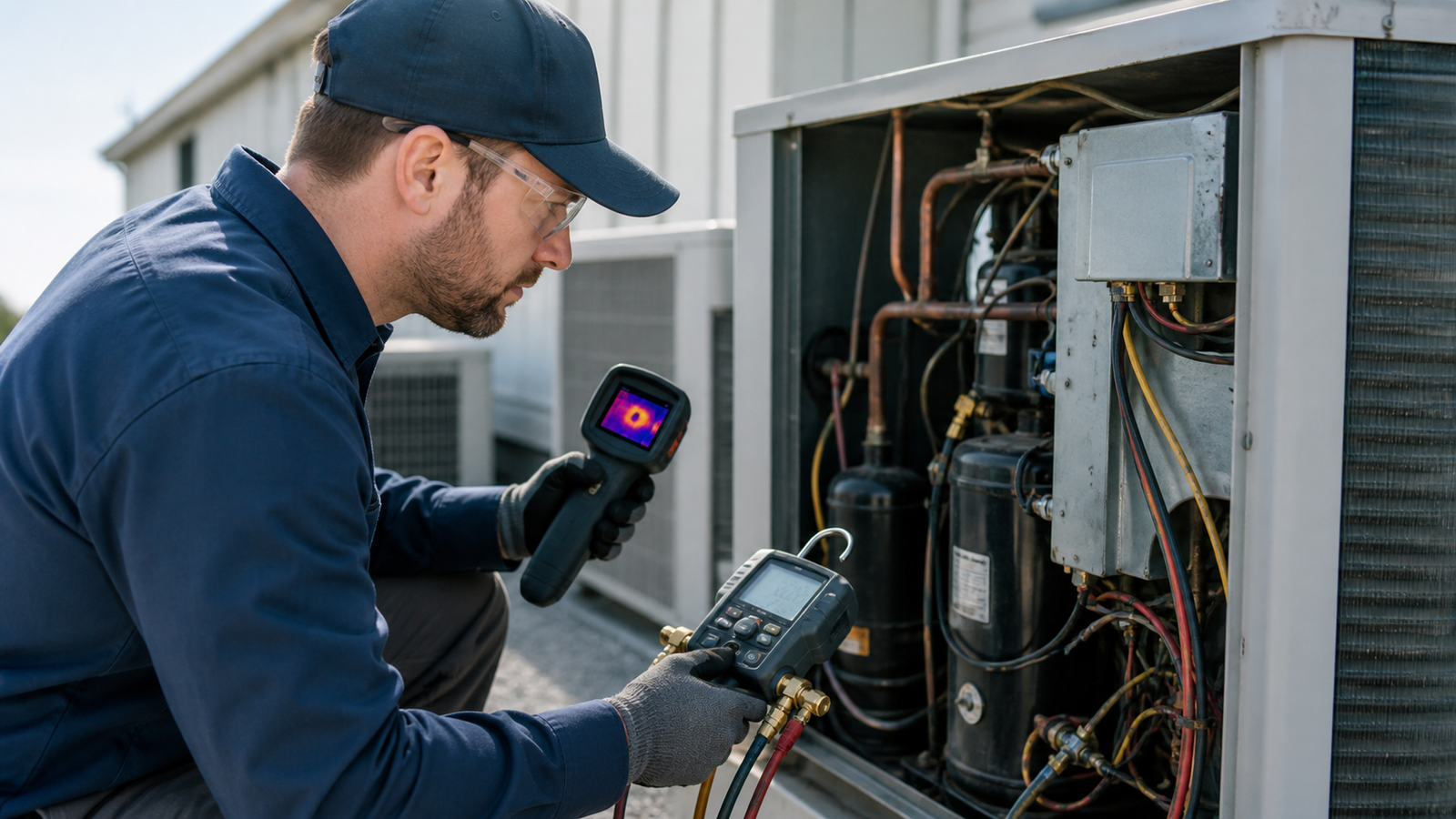
Older HVAC systems rarely lose efficiency in one dramatic moment. The decline usually happens in small steps, and many homeowners do not notice at first. A unit still turns on, air still moves through the vents, and the thermostat still responds, yet the system may be wasting energy behind the scenes. Rooms may feel uneven, cycles may run longer, and utility costs can rise without warning. Contractors look past the question of whether the system works and focus on how well it works. That approach matters because aging equipment often hides trouble until comfort and operating costs both suffer.
Where Efficiency Hides
- Looking Beyond Obvious Breakdowns
One of the first ways HVAC contractors identify hidden efficiency problems in older systems is by checking how the equipment performs under normal operating conditions rather than waiting for a full failure. An older unit can still cool or heat a home while quietly using more energy than it should. Contractors look for signs such as extended run times, weak airflow, temperature drift, short cycling, and delayed starts. They inspect filters, blower components, coils, electrical connections, and drain systems because each of these areas can reduce efficiency without completely stopping the system. Dirt on coils, loose wiring, and restricted airflow can force the equipment to work harder for the same result. Homeowners searching for Air Conditioning Repair in Duncan, SC, may discover during a routine visit that efficiency loss began long before the unit showed a serious symptom. By comparing what the system is doing with what it should be doing, contractors can uncover waste that would otherwise stay hidden behind the appearance of normal operation.
- Testing Airflow, Temperature, and System Response
Contractors also use direct measurements to find problems that are not obvious during a quick visual review. Older systems often struggle because air is not moving properly through the equipment and living spaces. A return vent may be pulling poorly, a supply run may be leaking, or an aging blower may no longer move air with the force it once had. These issues can create comfort complaints that seem minor but actually reflect larger efficiency trouble. Contractors may check temperature differences between supply and return air, observe cycle length, inspect thermostat communication, and evaluate whether the system is reaching the set point without unnecessary strain. They also watch how the equipment starts and stops, since repeated starts or overly long cycles can signal hidden wear or poor system balance. In many homes, the problem is not one failed part but several small inefficiencies working together. Careful testing helps show whether the equipment is being slowed by airflow restrictions, aging controls, or weak performance that has gradually become the new normal. They may also listen for changes in motor sound, notice uneven vent delivery, and compare room comfort from one area to another.
- Finding Losses Caused by Age and Neglect
Another way contractors identify efficiency trouble in older HVAC systems is by recognizing how years of use change the condition of parts that still appear functional. Belts, motors, capacitors, contactors, and fan components may continue operating even though they are no longer performing at a healthy level. Coils may carry buildup that insulates them from proper heat transfer, and duct connections may loosen enough to leak conditioned air into areas where it provides no comfort at all. Refrigerant issues can also hide within a system that has not completely stopped but no longer cools as consistently. Contractors piece these clues together by combining inspection with performance readings and homeowner observations. They may notice that one room stays warm, the outdoor unit runs too long, or the indoor blower sounds strained during each cycle. These are not always dramatic warning signs, but in an older system, they often point to energy loss happening day after day. Finding those quiet losses is what allows a contractor to recommend corrections before higher bills and harder strain shorten the life of the equipment. Even small declines in airflow or heat transfer can compound over the course of a season, making an aging system seem weaker each month.
Why Careful Diagnosis Makes a Difference
Hidden efficiency problems in older HVAC systems are rarely apparent at a glance. Contractors identify them by studying how the system operates, measuring airflow and temperature behavior, and examining aging parts that may still function but waste energy. Their goal is not only to keep the equipment running, but also to reveal why comfort has become less consistent and operation more demanding over time. That diagnosis helps homeowners see why an older system may seem adequate on the surface while costing more underneath. Once those losses are identified, repairs or adjustments can restore steadier performance and reduce unnecessary strain.