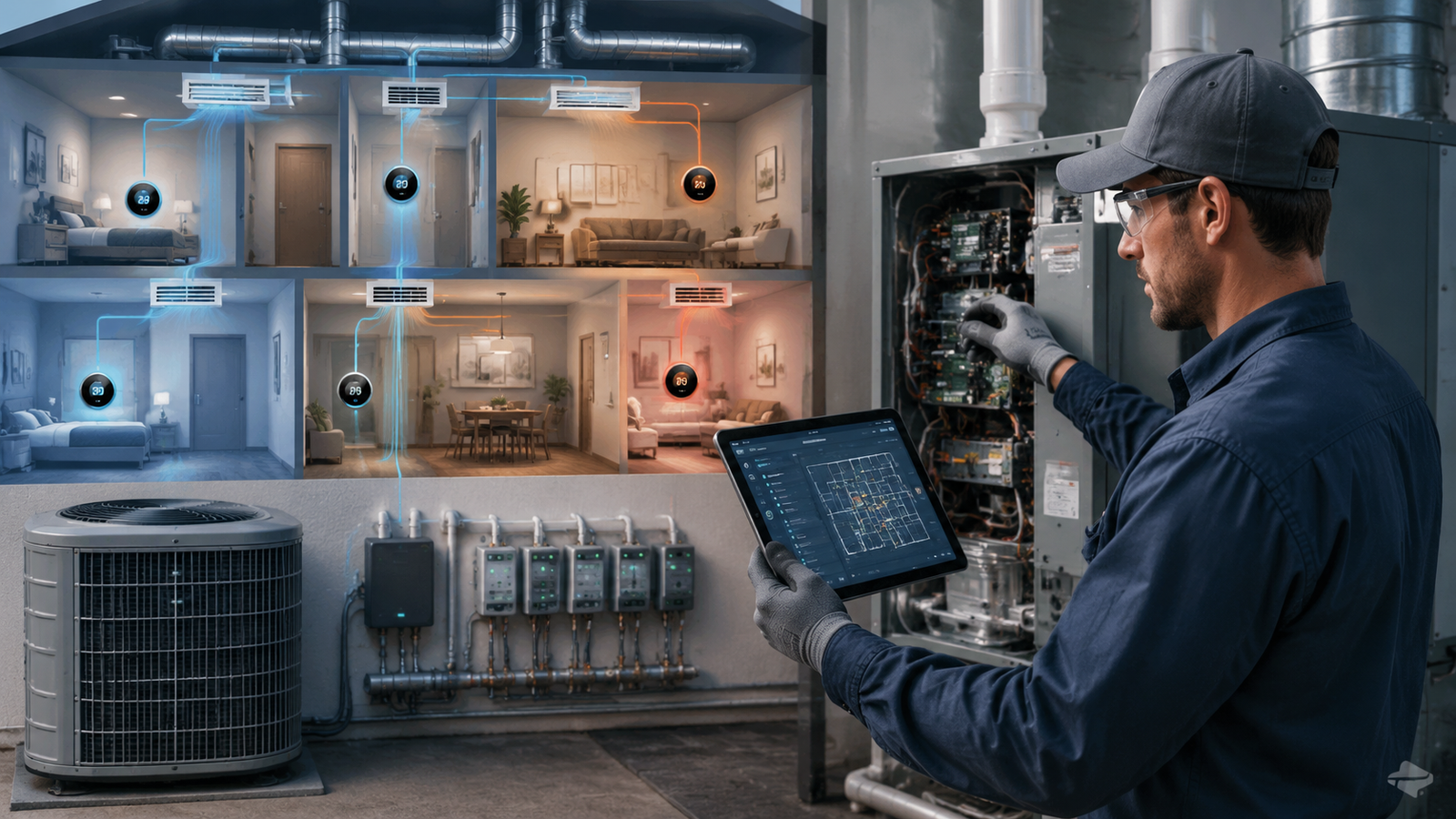
Multi-zone heating and cooling systems allow independent temperature control in different areas of a building. Each zone is often equipped with its own thermostat, allowing occupants to adjust comfort levels based on usage patterns, occupancy, and personal preference. Managing these systems is more complex than a single-zone setup because airflow, temperature, and pressure must be balanced across multiple circuits simultaneously. Technicians must understand how each zone interacts with the overall system to prevent imbalances that could lead to inconsistent comfort or strain on mechanical components. Proper planning and assessment are essential to ensure that every zone receives the intended heating or cooling without overworking the system or creating energy inefficiencies.
Understanding Multi-Zone System Dynamics
- System Assessment and Control Strategy
HVAC professionals begin by thoroughly evaluating the layout and requirements of each zone. This includes measuring square footage, insulation levels, window placement, and occupancy patterns. The assessment helps determine the capacity needed for each zone and the type of zoning components required, such as dampers, fans, and thermostats. Contractors often rely on advanced software and monitoring tools to analyze airflow distribution and temperature variations. Local service providers, such as Seattle HVAC contractors at Essential Heating and Air, assist homeowners and building managers in identifying areas where airflow adjustments or equipment modifications may be needed. By understanding the unique needs of each zone, technicians develop control strategies that maintain comfort while optimizing energy efficiency across the entire system.
- Installing and Balancing Dampers
Dampers are critical components in multi-zone systems, regulating airflow to individual areas. Proper installation and balancing are essential to ensure that each zone receives the correct amount of conditioned air. If a damper is too restrictive, a zone may experience insufficient heating or cooling. Conversely, an overly open damper can waste energy and create pressure imbalances. HVAC professionals carefully position and calibrate each damper, often using airflow meters and temperature sensors to confirm that adjustments achieve the desired balance. Balancing airflow prevents uneven temperatures, reduces stress on the system, and improves efficiency. Regular checks and recalibration may also be performed to maintain long-term performance as seasonal changes or building modifications occur.
- Thermostat Placement and Programming
Accurate thermostat placement is critical for the performance of multi-zone systems. Each thermostat must be located in an area that accurately represents the zone’s average temperature and is not influenced by drafts, direct sunlight, or nearby heat sources. Once installed, programmable or smart thermostats allow for scheduling based on occupancy and lifestyle patterns. These controls coordinate with dampers and the central system to precisely regulate airflow and temperature. Proper programming ensures that zones receive heating or cooling only when needed, reducing energy consumption while maintaining comfort. Technicians may adjust settings during installation and revisit them during maintenance to accommodate changing conditions or user preferences, ensuring that control systems operate effectively and reliably over time.
- Monitoring System Performance
After installation, HVAC professionals monitor multi-zone systems to ensure consistent operation and efficiency. Sensors and monitoring tools are used to track temperature differentials, airflow rates, and system pressure. This data helps identify zones that may be over- or under-conditioned, indicating the need for adjustments to dampers, thermostat settings, or equipment calibration. Monitoring also enables proactive maintenance, helping to prevent mechanical failures caused by uneven load distribution. By continuously observing performance metrics, technicians can maintain consistent comfort throughout the building while optimizing energy use. Performance monitoring ensures that the multi-zone system adapts effectively to seasonal demands and varying occupancy patterns.
- Addressing Maintenance and Troubleshooting
Maintenance of multi-zone systems requires specialized attention to components such as dampers, fans, ductwork, and thermostats. HVAC professionals routinely inspect these elements to ensure they function correctly, adjusting or repairing them as necessary. Troubleshooting may involve identifying airflow restrictions, malfunctioning sensors, or control communication issues that affect zone temperatures. Technicians also clean and service ductwork to prevent blockages that reduce efficiency. Regular maintenance not only improves comfort and energy efficiency but also prolongs the life of system components. By addressing minor issues early, professionals prevent costly repairs and ensure that the system continues to operate reliably across all zones.
Coordinated Systems Deliver Comfort and Efficiency
Complex multi-zone heating and cooling systems offer precise temperature control and improved energy efficiency when managed correctly. HVAC professionals assess building layout, install and balance dampers, position and program thermostats, monitor performance, and conduct routine maintenance. By coordinating airflow and temperature control across multiple zones, technicians prevent uneven heating or cooling, reduce energy consumption, and enhance occupant comfort. Ongoing monitoring and adjustments ensure the system continues to function efficiently despite seasonal changes or building modifications. Proper handling of multi-zone systems ensures long-term reliability, consistent comfort, and optimized energy use, providing homeowners and building managers with effective climate control throughout the entire property.
Read also: Why Does Professional Garage Door Installation Matter for Long-Term Performance?