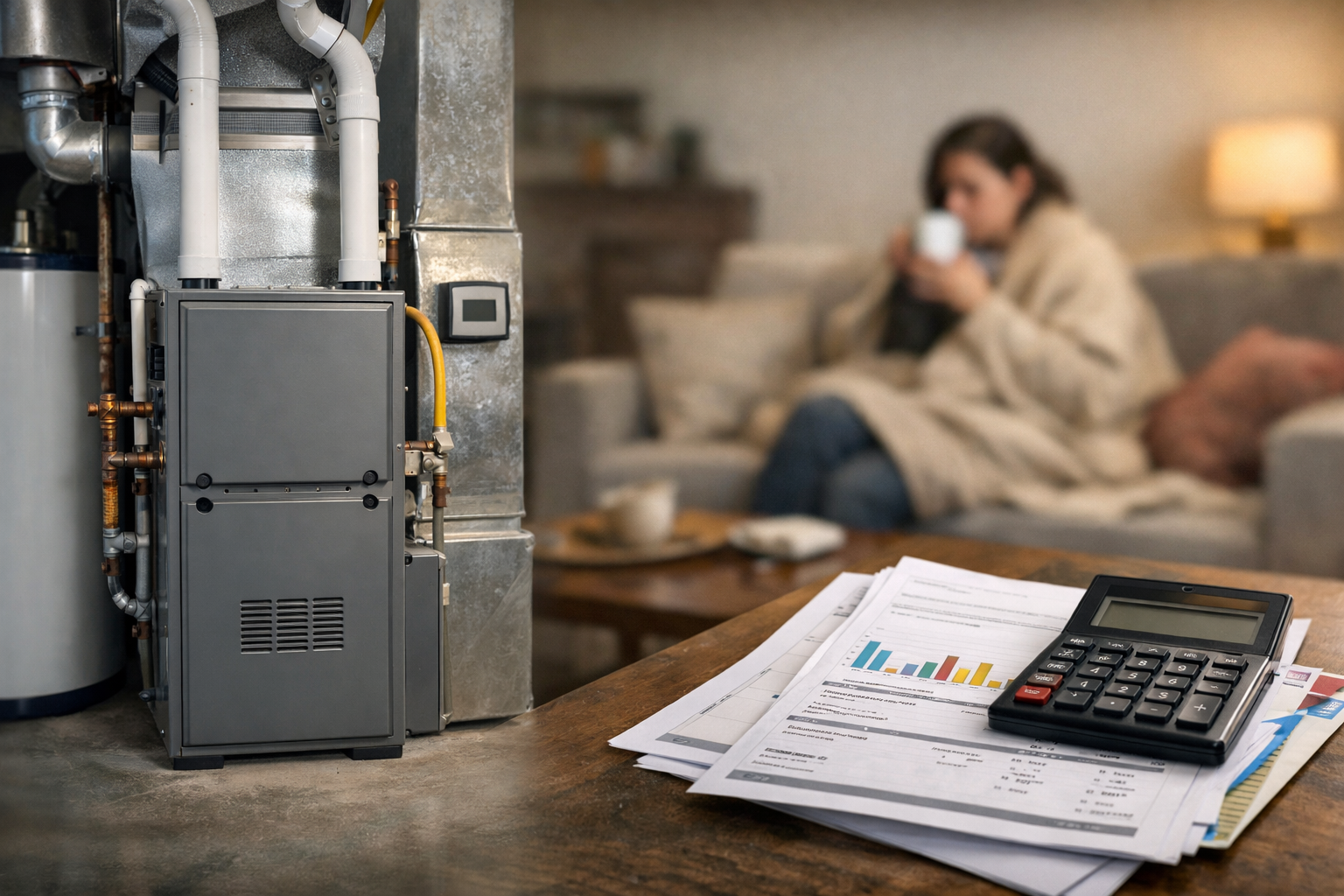
A furnace does more than simply produce heat; it determines how consistently and efficiently a home stays comfortable during colder months. We will explore how correct furnace sizing plays a decisive role in shaping indoor temperature stability, energy consumption, and long-term operating costs. Many homeowners focus on brand or features, yet the sizing calculation often has a deeper influence on performance outcomes. An improperly sized unit can quietly drive up expenses and reduce comfort without obvious warning signs. Understanding how sizing works and why it matters allows homeowners to make informed decisions that align heating output with actual household demands.
Understanding Furnace Sizing and Load Calculation
Furnace sizing refers to matching a unit’s heating capacity, measured in British Thermal Units (BTUs), to a home’s specific heating requirements. This requirement is not arbitrary; it is determined by a detailed load calculation that considers square footage, insulation quality, ceiling height, window efficiency, climate conditions, and even the house’s orientation. When these variables are accurately evaluated, the resulting furnace capacity aligns with the home’s actual heat loss. Without this calculation, installations often rely on rough estimates, which can easily lead to inefficiencies.
A unit that appears sufficient on paper may fail to respond properly to temperature fluctuations if the calculation is skipped or oversimplified. Proper sizing ensures that the furnace operates within its intended performance range, avoiding excessive strain or underperformance. This balance is essential because it directly affects how smoothly the system cycles on and off, how evenly heat is distributed, and how effectively the furnace converts fuel into usable warmth. Over time, these factors influence both system longevity and the predictability of utility expenses.
Impact of Oversized Furnaces on Efficiency and Costs
An oversized furnace might seem like a safe choice, as it can generate more heat than required, but this assumption often leads to unintended consequences, particularly in systems associated with San Tan Valley Heating and Cooling. When a furnace is too large for a home, it heats the space rapidly and shuts off before completing a full heating cycle. This process, known as short cycling, creates repeated bursts of operation, reducing overall efficiency. Instead of maintaining a steady temperature, the system repeatedly turns on and off, resulting in uneven heating and noticeable temperature swings. These frequent cycles also increase wear on internal components, including the blower motor and ignition system, thereby shortening the unit’s lifespan.
From a cost perspective, short cycling consumes more energy than a properly sized unit because each startup requires a surge of fuel and electricity. Over time, this pattern leads to higher utility bills without delivering consistent comfort. Additionally, oversized systems often struggle with humidity control, leaving indoor air feeling dry and uncomfortable. While the furnace may appear powerful, its inability to operate in longer, stable cycles undermines its overall performance and increases long-term operating expenses.
Consequences of Undersized Furnaces on Comfort and Performance
While oversized furnaces create inefficiencies through excess capacity, undersized furnaces face the opposite challenge: they cannot generate enough heat to meet demand. In colder conditions, an undersized unit runs continuously to maintain the desired temperature, yet it often falls short. This constant operation places significant stress on the system, increasing the likelihood of breakdowns and reducing the lifespan of key components. From a comfort standpoint, rooms may remain unevenly heated, with colder areas persisting even when the system runs nonstop. This situation can be particularly problematic in larger homes or those with poor insulation, where heat loss is more pronounced.
Energy consumption also rises because the furnace operates for extended periods without achieving efficient temperature regulation. Instead of cycling off after reaching the set temperature, it remains active, drawing continuous power and fuel. This inefficiency results in higher monthly utility costs and diminished performance reliability. Over time, homeowners may notice that even small temperature adjustments fail to produce meaningful changes, signaling that the furnace lacks the capacity to respond effectively to environmental demands.
Balancing Performance and Cost Through Accurate Sizing
Achieving the correct furnace size creates a balance between heating performance and energy efficiency, allowing the system to operate as intended. A properly sized furnace runs in consistent cycles, maintaining stable indoor temperatures without excessive fluctuations. These steady cycles improve energy utilization by avoiding the repeated startup costs of oversized units and the prolonged operation of undersized ones. As a result, fuel consumption becomes more predictable, and utility bills remain within a manageable range. Accurate sizing also supports better airflow distribution, ensuring that heat reaches all areas of the home evenly. This consistency reduces the need for manual thermostat adjustments and enhances overall comfort.
Additionally, when a furnace operates within its designed capacity, internal components experience less stress, resulting in fewer repairs and a longer service life. Homeowners benefit not only from lower energy costs but also from reduced maintenance expenses over time. Proper sizing aligns the furnace’s output with real-world heating demands, creating a system that performs reliably under varying weather conditions without unnecessary strain or inefficiency.
Furnace sizing is a foundational factor that shapes both heating performance and long-term utility costs. Oversized units may create short cycling and uneven temperatures, while undersized systems struggle to meet demand and operate continuously. Both scenarios increase operational costs and reduce efficiency. Accurate sizing, guided by thorough load calculations, ensures the furnace operates within optimal parameters, delivering consistent heat without unnecessary energy use. By prioritizing proper sizing during installation or replacement, homeowners can achieve a balanced heating system that supports comfort and financial efficiency.
Also Read: Fivebpeol Uncovered: The Modern Approach to Digital Content and Innovation