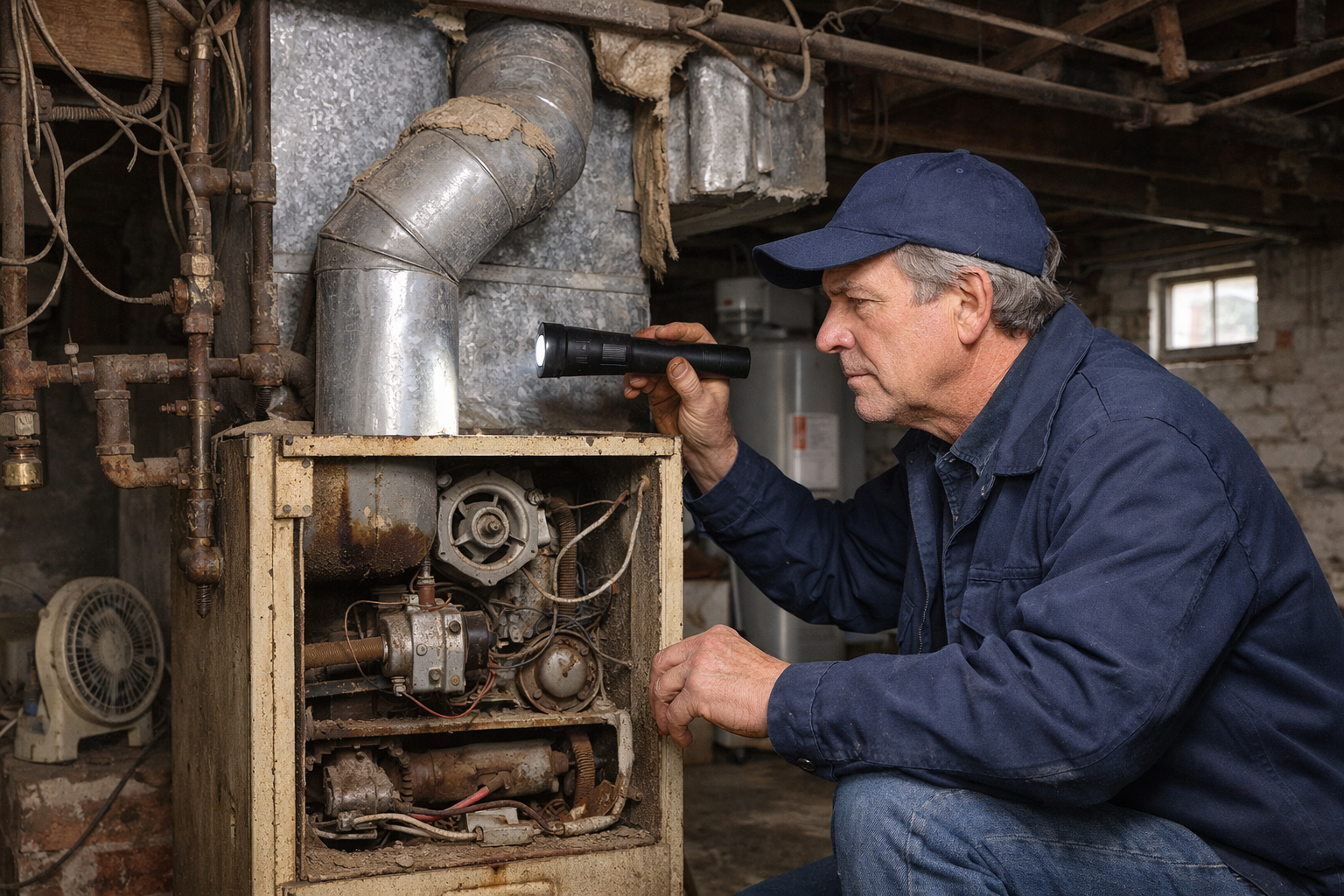
Older homes often carry a hidden contradiction. Owners want modern comfort, greater efficiency, and newer HVAC equipment, yet the house itself may not be ready to support what that equipment requires. Original ductwork may be undersized, electrical capacity may be limited, return air may be weak, and insulation may be far below current expectations. In that situation, replacing the unit alone can create fresh problems instead of solving old ones. A careful HVAC contractor does not treat the equipment as the whole system. The contractor looks at how the house performs, where the limitations are, and what has to change first.
Fixing The Mismatch
- Ductwork Usually Tells The Truth
One of the first things an HVAC contractor does in an older home is evaluate whether the existing duct system can handle modern airflow demands. Many older houses were built with duct layouts sized for earlier equipment standards, smaller capacity expectations, or rooms that have since been remodeled, enclosed, or expanded. A modern system may require more consistent airflow than those ducts can deliver, which means the equipment could end up short-cycling, running with high static pressure, or leaving certain rooms uncomfortable even though the new unit is technically operating. Instead of forcing new equipment onto a weak air distribution system, the contractor may recommend resizing trunk lines, adding return air pathways, sealing major leaks, or redesigning certain branch runs so the house can properly receive conditioned air. In many retrofit situations, contractors associated with HVAC services in Camas by Sarkinen Heating and Cooling and similar providers know that older homes often fail at the duct level before they fail at the equipment level. That is why a responsible contractor does not begin with a bigger unit or a faster installation. The contractor begins by asking whether the house can move air in a way that allows modern equipment to perform without strain, noise, and recurring comfort complaints.
- Electrical And Structural Limits Need Attention
Older homes may also struggle to support modern HVAC equipment because the limitations are not only airflow-related. Electrical service, framing access, and equipment placement can all become part of the problem. A newer heat pump, air handler, or high-efficiency furnace may require electrical upgrades, circuit changes, condensate management adjustments, or venting revisions that the original house was never designed to handle. In tight attics, shallow crawlspaces, and compact mechanical closets, the physical dimensions of modern equipment can create installation challenges that affect serviceability and long-term reliability. A contractor dealing with this kind of house often has to think like both a mechanical planner and a building problem-solver. That may mean coordinating electrical improvements, relocating components to better areas, changing line set routing, or recommending a different equipment configuration that fits the structure more realistically.
In some cases, a contractor may even advise against a like-for-like replacement if the old system design was flawed from the outset. The point is not simply to make the new equipment fit somewhere. The point is to install a system that the home can support safely, maintain properly, and operate consistently, without turning every future service visit into a struggle due to cramped placement or outdated power conditions.
- Sometimes, the House Needs A Different Strategy
When an older home cannot adequately support conventional modern HVAC equipment, a skilled contractor may recommend a different system strategy rather than trying to force a standard solution into a poor fit. That can include ductless mini-split systems, zoned approaches, smaller distributed units, or hybrid configurations that reduce dependence on inadequate original ductwork. In homes with plaster walls, historic details, limited chases, or room additions that never integrated well with the central system, this kind of adjustment can make more sense than tearing apart large sections of the structure. Contractors may also recommend envelope improvements such as attic insulation, air sealing, window upgrades, or crawlspace correction before final equipment selection. That is because some older homes create so much heat gain, heat loss, or infiltration that even well-installed equipment struggles to keep up. In those cases, improving the building shell can reduce the load enough to make the HVAC system work far more effectively. A thoughtful contractor understands that older houses often need a layered solution. The answer may involve some duct modifications, some building-performance upgrades, and a system choice tailored to the house’s actual limitations rather than to a standard replacement model. That kind of planning protects comfort and prevents the equipment from having to compensate for problems it was never meant to solve alone.
Good Contractors Adapt The System To The House
When an older home cannot properly support modern HVAC equipment, the right contractor does not treat that as a simple obstacle to push past. It becomes the central issue to solve. That may mean correcting ductwork, addressing electrical capacity, improving the building envelope, changing equipment layout, or choosing a different system type altogether. The goal is not just to install new hardware. The goal is to create a workable match between the home and the equipment so that comfort, efficiency, and reliability can actually improve. In older houses, that kind of adaptation is often what separates a successful upgrade from an expensive disappointment.
Read also: How Do Luxury Apartments for Rent Balance Privacy With Community Living?