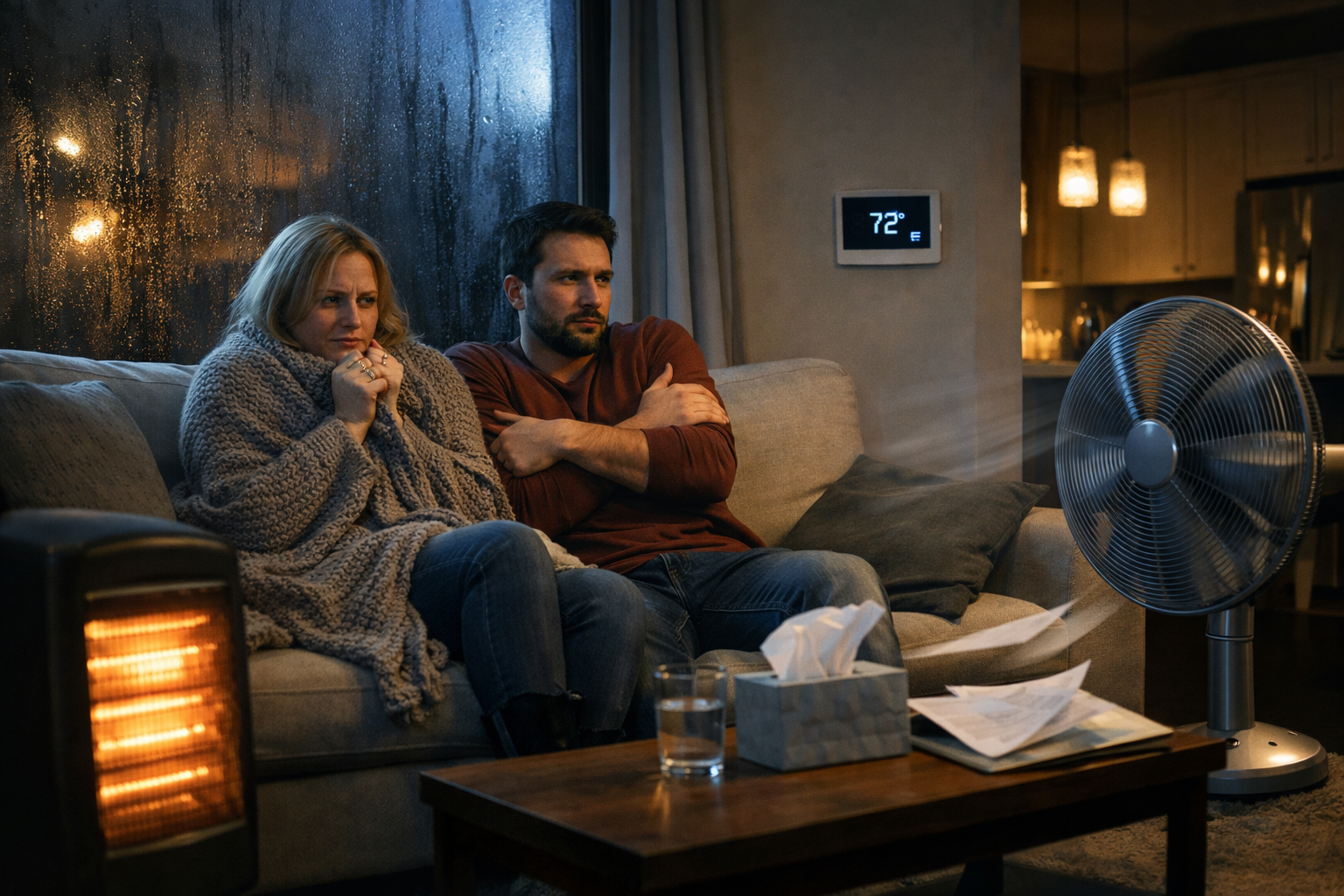
A new HVAC system should improve comfort, but that is not always what happens. Many homeowners expect instant relief after replacing old equipment, only to find that some rooms still feel hot, others stay cold, and humidity or airflow problems continue almost exactly as before. When that happens, the issue is usually bigger than the equipment itself.
That is an important distinction for property managers, facility managers, and building owners trying to solve ongoing comfort complaints. New equipment can improve efficiency and reliability, but it cannot automatically correct deeper issues tied to airflow, duct design, insulation, pressure balance, or installation decisions. If the system was replaced without identifying why the home felt uncomfortable in the first place, the new equipment may simply be operating inside the same flawed conditions.
Why New Equipment Is Not Enough
- The System Is Only One Piece
A heating and cooling system does not create comfort by equipment alone. It depends on how air is delivered, how the home holds temperature, and how the building responds to seasonal load. A seasoned Weymouth HVAC Contractor will usually look beyond the furnace or condenser and ask whether the rest of the system properly supports the new equipment. If the ductwork leaks, return airflow is restricted, or the home has major insulation gaps, even a modern system can struggle to maintain consistent temperatures. The equipment may be new, but the conditions surrounding it may still be working against it.
- Ductwork Often Stays The Same
One of the most common reasons comfort problems continue after installation is that the duct system was never corrected. Many replacements focus on the indoor and outdoor units while leaving undersized, damaged, poorly sealed, or badly routed ductwork in place. That decision can preserve the original comfort problem. If one side of the house never received enough airflow before, a new system may still deliver too little air there now. In some homes, ducts in attics or crawlspaces lose conditioned air before it even reaches the living space. When that happens, the equipment may perform well on paper while the home still feels uneven in practice.
- Sizing Problems Create New Discomfort
New equipment can also disappoint when it is not sized correctly for the house. Oversized systems tend to satisfy the thermostat too quickly, which can shorten run times and reduce moisture removal during the cooling season. Undersized systems may run longer without ever fully closing the comfort gap in harder-to-condition areas. Proper sizing depends on more than square footage. It should reflect insulation levels, window exposure, orientation, air leakage, ceiling height, and other load factors. If the replacement was based on the old unit’s size rather than a real evaluation of the home, discomfort can remain or even worsen.
- Air Balance Still Matters
A house may have a capable system and still feel uncomfortable because the air is not balanced properly between rooms. Some spaces need more supply air, others need better return paths, and some may be affected by closed doors, pressure differentials, or layout changes that alter airflow. This is why temperature complaints often continue in upstairs bedrooms, additions, bonus rooms, or rooms at the end of long duct runs. The thermostat may show a normal reading in one location while other parts of the home feel noticeably different. New equipment does not automatically correct those distribution problems.
- Insulation And Leakage Affect Comfort
HVAC equipment can only condition the space it serves. If the home is losing too much heat in winter or gaining too much heat in summer, the comfort problem may be tied to the building envelope rather than the equipment. Poor attic insulation, recessed lighting leaks, drafty windows, unsealed penetrations, and insufficient weather barriers can all cause discomfort that persists even after an HVAC replacement. In those cases, the system keeps operating to offset the losses the house continues to incur. That often leaves owners frustrated because they invested in new equipment but never addressed the structural reasons the home was hard to condition.
- Installation Quality Shapes Results
Even properly selected equipment can underperform if installation quality is poor. An incorrect refrigerant charge, poor airflow setup, poor static pressure conditions, improper thermostat placement, and commissioning shortcuts can all affect comfort. A new system is not truly delivering its intended performance unless it has been installed and adjusted with the rest of the house in mind. This is where many comfort complaints become more revealing. The homeowner may believe the equipment failed when the actual issue is that the system was never tuned, tested, or integrated properly after installation.
Real Comfort Requires Full Evaluation
Homes remain uncomfortable after new HVAC equipment is installed, even when the real problem was never limited to the equipment itself. Duct deficiencies, sizing errors, poor air balance, envelope leakage, insulation issues, installation flaws, and humidity control problems can persist after a replacement and continue to affect daily comfort. That is why solving a comfort complaint requires a whole-system view rather than a unit swap alone. For property owners and managers, the practical takeaway is clear: new equipment can be an important step, but lasting comfort depends on how well the system, ductwork, and building all work together.