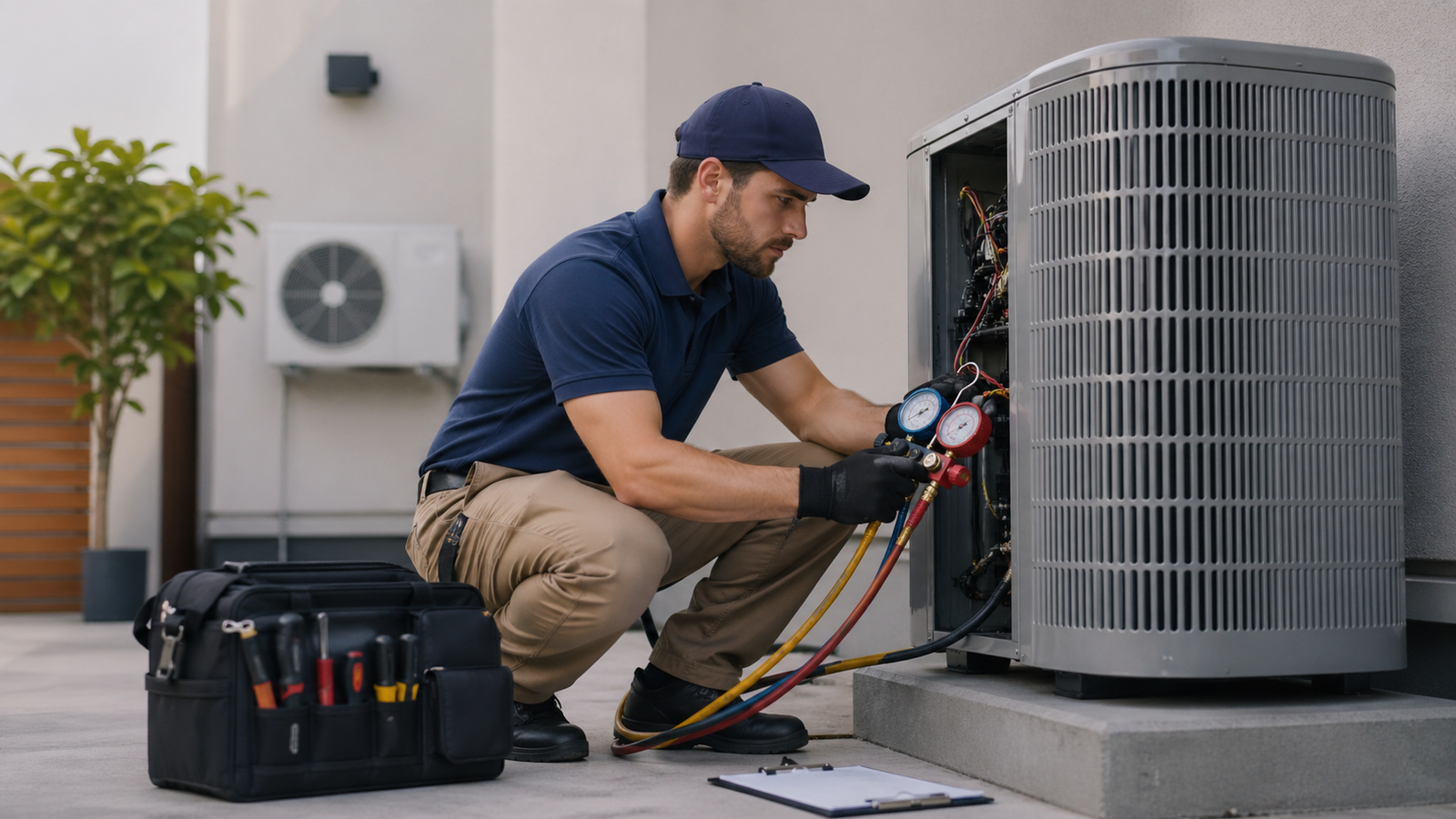
Many property owners think an air conditioning contractor is only needed when a unit stops cooling or starts making noise. That narrow view overlooks the broader role these contractors play in maintaining indoor environments stable, efficient, and safe over time. Their work often begins long before a breakdown and continues well after a repair is complete. They evaluate system condition, airflow, equipment performance, installation quality, and operating demands across the property. In many cases, they are not just fixing a faulty part. They are managing the overall performance of a cooling system to support comfort, control energy use, and avoid repeated disruptions.
What the contractor really handles
- Evaluating Whole-System Performance
An air conditioning contractor looks beyond the immediate symptom because cooling problems often start somewhere other than the part that appears to fail. A room that never cools properly may indicate poor airflow, duct leakage, thermostat misplacement, low refrigerant, dirty coils, restricted returns, or equipment that was never properly matched to the building. Contractors inspect how the full system is operating rather than treating each service call like an isolated mechanical issue. They test temperature split, inspect electrical components, review drainage, confirm refrigerant pressures, and examine whether the system is cycling too often or running too long. That broader diagnostic approach matters because repeated service calls usually happen when the root cause stays unresolved. A contractor also checks whether previous repairs were temporary fixes that allowed performance problems to keep building in the background. In busy climates where cooling demand stays high for long stretches, property owners often look for AC repair in Phoenix when the real need is a contractor who can assess the entire system and identify why stress keeps returning. That difference separates patchwork service from long-term system management.
- Managing Installation Quality and Equipment Fit
A large part of the contractor’s job involves ensuring equipment is installed and configured to suit the building, rather than simply replacing one unit with another of similar size. Air conditioning performance depends on proper sizing, airflow balance, line-set condition, electrical integrity, thermostat placement, and duct design. If any of those elements are off, a system can cool unevenly, waste energy, and wear out faster. Contractors measure load requirements, review insulation levels, consider sun exposure, examine duct paths, and account for how the building is actually used during the day. That means their role includes planning, coordination, and quality control, not just mechanical labor. During installation or replacement work, they also manage startup procedures, pressure checks, drain performance, and calibration steps that affect the unit’s performance from day one. A system can be brand new and still underperform if it is rushed into service without proper setup. Contractors prevent that outcome by linking equipment selection to building conditions, ensuring the cooling system serves the space it is in rather than operating as a generic appliance with no real tuning.
- Protecting Efficiency, Indoor Air, and Reliability
Beyond repairs and installations, air conditioning contractors help protect the property’s long-term operating condition. They monitor wear patterns, identify declining efficiency, and spot issues that can affect comfort even when the unit still turns on. A system may appear functional while quietly losing capacity because of blocked coils, weak airflow, failing capacitors, loose wiring, or duct losses. Contractors address those conditions before they create a complete interruption. They also work on indoor air concerns tied to filtration, humidity control, ventilation, and contaminant buildup inside the system. Poor cooling is not always about temperature alone. Occupants may notice stale air, uneven humidity, dust circulation, or hot and cold zones that make a property uncomfortable even when the thermostat setting looks normal. Contractors improve those conditions by maintaining airflow pathways, checking blower performance, cleaning critical components, and recommending corrections when the system setup undermines comfort. Their work also supports equipment life, because systems that run under strain tend to fail earlier and cost more to operate. Preventive attention is often what keeps a property from sliding into recurring service emergencies.
- Supporting Planning, Compliance, and Ongoing Decisions
An air conditioning contractor also helps owners make practical decisions about maintenance timing, replacement strategy, code compliance, and operating priorities. That guidance becomes important when a property manager is deciding whether to continue repairing an aging unit, phase in upgrades, or address hidden issues in the ducts and controls first. Contractors review system age, condition history, energy performance, and repair frequency to show what is financially sensible over time. They may coordinate permits, verify installation requirements, document system conditions, and explain how the current equipment complies with local standards. On larger projects, they often work alongside electricians, roofers, builders, or facility teams to make sure cooling equipment integrates properly with the rest of the site. Their role is partly technical and partly operational. They help property owners avoid bad timing, poor replacements, and expensive guesswork. When that guidance is missing, a building often ends up with repeated service calls, inconsistent comfort, and reactive spending. A contractor’s value goes far beyond changing parts, as the job also involves helping the owner understand what the system needs now and what it is likely to need next.
Why Their Work Matters Long Term
An air conditioning contractor does far more than respond to a broken unit on a hot day. The role includes diagnosing system-wide issues, managing installation quality, protecting airflow and air quality, and helping owners plan for long-term reliability. That broader involvement is what keeps cooling equipment from becoming a constant source of disruption and expense. When contractors do their job thoroughly, they reduce repeat failures, improve comfort, and make building systems easier to manage. Their work supports performance, not just repair. That is why the role remains important long after the service truck leaves the property.